

Vessels trading in the Arabian Gulf and off Fujairah foul their sea water side coolers faster than the same ships do in cooler waters. High sea water temperature, high salinity and, in coastal and anchorage waters, a significant silt and biological load combine to attack cooler performance from three directions at once.
The practical question for a chief engineer is not whether the coolers will foul - they will - but how to tell when cleaning is due, and whether an in-situ chemical circulation will do or the unit must be opened.
Three kinds of fouling, three different remedies
| Type | What causes it | What it looks like | What removes it |
|---|---|---|---|
| Scaling | Dissolved salts precipitating on hot surfaces - accelerated by high sea water temperature and high tube wall temperature | Hard, adherent white or grey deposit, usually worst at the hot end | Chemical descaling - circulation of an inhibited acid, then neutralise and flush |
| Biofouling | Marine growth settling and multiplying in low-flow areas, common during extended anchorage periods | Soft, slimy layer, sometimes with shell growth in inlet boxes and end covers | Mechanical cleaning and brushing, plus chemical treatment; prevention by keeping flow up |
| Silt and debris | Suspended solids in coastal water, stirred up at anchorage and in shallow water | Loose sediment in headers, blocked individual tubes, partly blocked strainers | Flushing, water jetting and rodding; strainer maintenance |
These usually occur together. A cooler that has silted first will then scale and biofoul in the stagnant areas the silt created, which is why a cooler that is left too long often needs opening rather than circulating.
Reading the trend instead of the calendar
The most reliable indication is not a fixed interval but the trend of two measurements taken at comparable load and sea water temperature:
- Temperature difference across the cooler - the cooled medium leaving warmer than it used to at the same load and sea temperature means heat transfer is falling.
- Pressure drop across the sea water side - rising differential means flow area is being lost to deposits and debris.
- Sea water outlet temperature relative to inlet - a shrinking rise with an unchanged heat load points at reduced flow.
Falling heat transfer with steady pressure drop suggests scaling on the surfaces. Rising pressure drop with a sharper fall in transfer suggests blockage - silt, debris or growth. Log these at a consistent load so the numbers are comparable; a spot reading on its own tells you very little.
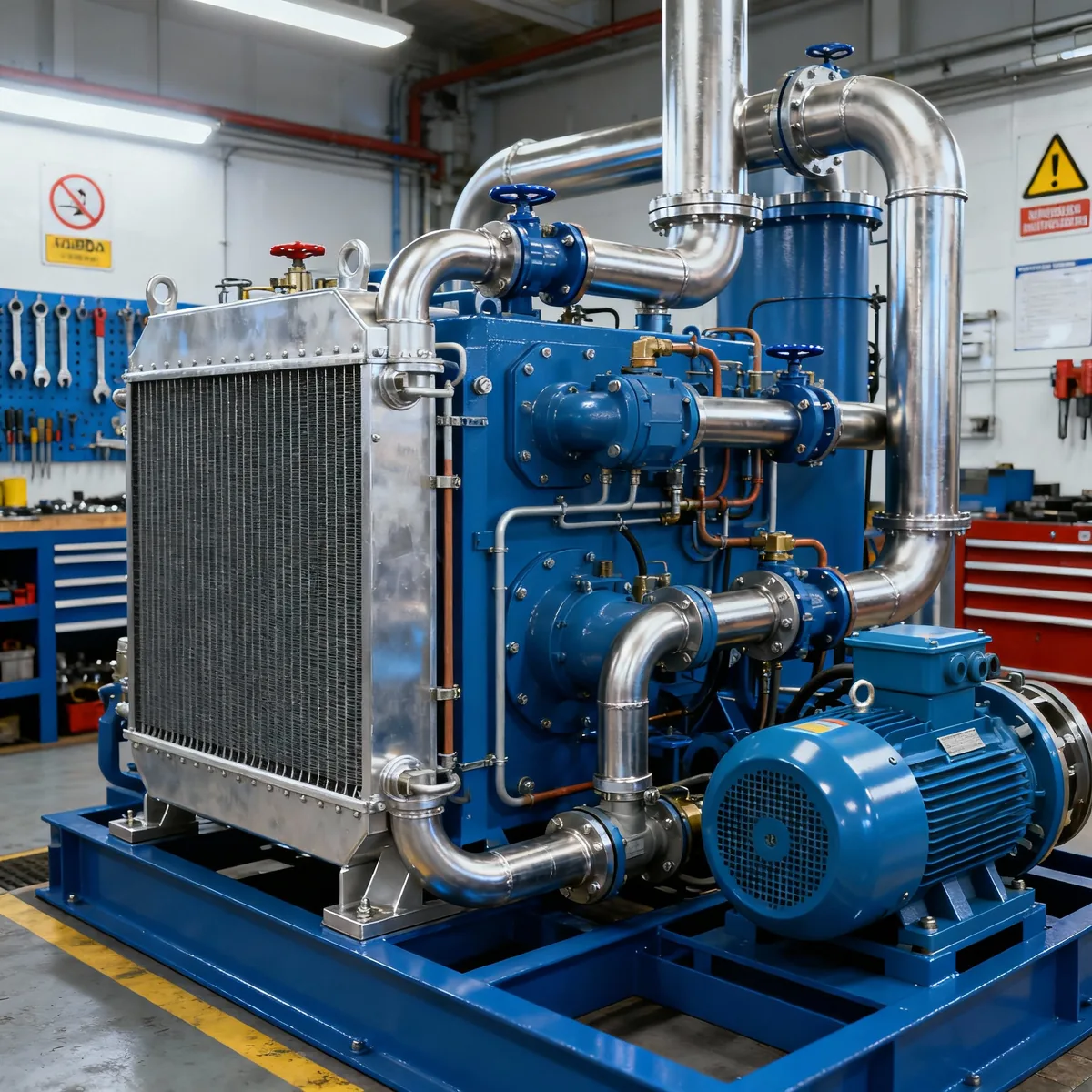
In-situ circulation or open up?
In-situ chemical circulation suits a cooler with scaling, a short port stay and no suspicion of mechanical damage. A circulation rig is connected to the sea water side, inhibited chemical is circulated hot, then neutralised and flushed. The engine stays assembled, and the result is verified by pressure drop and temperature difference on load.
Opening the unit is the right call when the pressure drop indicates blockage rather than scale, when there is any suspicion of tube leakage or gasket failure, when the unit has not been opened for a long period, or when a class or maker inspection is due anyway. For plate coolers it also allows each plate to be inspected for pinholes and cracks, which circulation cannot do.
What an open-up clean involves
- Plate pack dimension recorded before opening, or tube bundle withdrawn on shell-and-tube units.
- Plates separated, cleaned individually and inspected for cracks and pinholes; tubes brushed and water jetted.
- Chemical treatment of the deposits that mechanical cleaning will not shift.
- Gaskets, O-rings and sacrificial anodes renewed.
- Leaking tubes plugged or renewed within the permitted allowance.
- Re-assembly to the recorded plate dimension or bundle fit, then hydraulic pressure testing of both circuits before the unit goes back into service.
Reducing how often you have to do this
- Keep sea water flow up - running with throttled flow to hold a temperature encourages deposits.
- Maintain the sea water strainers properly; most silt problems start there.
- Where a marine growth prevention system is fitted, keep it working and dosing correctly.
- During extended anchorage periods off Fujairah, be aware that biofouling accelerates - factor that into inspection intervals rather than the sea-going interval.
- Log cooler performance at consistent load so the trend is visible long before performance becomes a problem.
We carry out marine heat exchanger chemical cleaning both in-situ onboard at Fujairah anchorage and as a full open-up clean with pressure testing at our Al Hayl Industrial Area workshop.