

Surging - that cyclic barking or hunting from the turbocharger as flow briefly reverses across the compressor - is alarming and genuinely damaging if left. It is also frequently blamed on the turbocharger when the turbocharger is the victim rather than the cause.
Before committing to an overhaul, it is worth an hour of measurement to establish whether the turbocharger is worn, or whether it is being pushed into surge by something else in the air and gas path. This article sets out the checks we run before quoting a marine turbocharger overhaul in Fujairah.
What surging actually is
A compressor has a stable operating range. Push it to too little flow at too high a pressure ratio and the flow across the blades breaks down and momentarily reverses, then re-establishes, then breaks down again. That cycle is the noise you hear. Anything that restricts flow through the engine, or raises the pressure the compressor must deliver, moves the operating point toward the surge line.
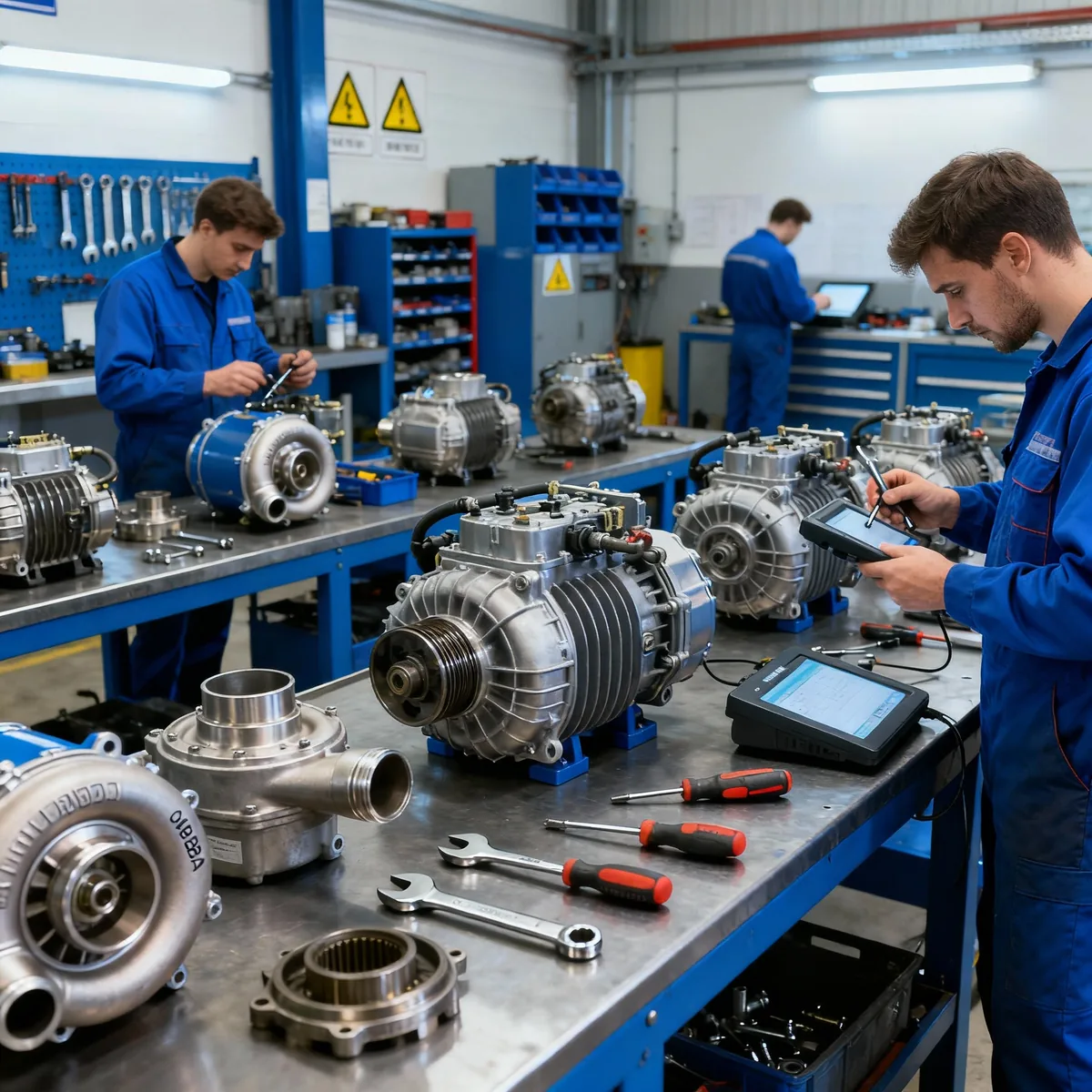
Record the picture before touching anything
- Load and engine speed when surging starts, and whether it is on load increase, decrease or steady.
- Scavenge or charge air pressure against the value expected at that load.
- Turbocharger speed if indicated.
- Exhaust temperatures per unit and at the turbine inlet and outlet.
- Air filter and air cooler differential pressure.
- Sea and engine room ambient conditions - Gulf ambient temperatures shift the whole picture.
- Weather and sea state - surging only in heavy weather points somewhere quite different from surging alongside.
Surging only when the vessel is pitching heavily in a seaway is often propeller emergence and load fluctuation rather than a machinery defect. The fix there is operational, not an overhaul.
Cause 1: Air side restriction
The compressor cannot deliver flow it is not being fed. Blocked or oil-soaked air filters, a fouled compressor wheel or diffuser, and a blocked or scaled charge air cooler on the air side all reduce flow. The signature is low charge air pressure with a raised differential across the filter or cooler.
This is the cheapest thing to eliminate, and often the answer. Clean the filters, check the cooler air side differential, and inspect the compressor wheel for deposits.
Cause 2: Gas side fouling and restriction
Deposits on the turbine side reduce the energy the turbine can extract and change the effective nozzle area. Heavy fouling of the nozzle ring in particular shifts the operating point. Look for raised exhaust temperature at the turbine inlet with turbocharger speed lower than expected for the load, and check the exhaust gas boiler and back pressure - a fouled boiler raises back pressure and drags the whole gas path with it.
Cause 3: Fuelling and combustion
Uneven or excessive fuelling, poor injector condition, or incorrect timing change the exhaust energy delivered to the turbine and can produce surging that no amount of turbocharger work will fix. Compare exhaust temperature spread between units - a large spread points at fuelling or valve condition rather than the turbocharger.
Cause 4: The turbocharger itself
Genuine turbocharger defects that cause or contribute to surging include damaged or eroded blades, worn bearings allowing the rotor to run off-centre, damaged nozzle ring vanes and a fouled or distorted diffuser. These need clearances measured, not judged by eye - axial and radial rotor clearances against the maker's limits are the deciding evidence.
Deciding what to do
| Observation | Points to | Action before overhaul |
|---|---|---|
| Low charge air pressure, high filter differential | Air side restriction | Clean or renew filters, inspect compressor wheel and cooler air side |
| High turbine inlet temperature, low TC speed | Gas side fouling or nozzle ring | Turbine wash where fitted, check exhaust back pressure and gas boiler condition |
| Wide exhaust temperature spread between units | Fuelling, injectors or valves | Injector testing, timing check, valve condition - see our fuel system service |
| Surging only in heavy weather | Propeller emergence and load swing | Operational, not machinery |
| Noise from the rotor, abnormal vibration | Bearing or rotor damage | Stop and inspect - clearance measurement, do not run on |
| Everything else normal, clearances out of limits | Genuine turbocharger wear | Overhaul is now the right spend |
What an overhaul includes
- Rotor removal, chemical cleaning and inspection of blades for erosion and damage.
- Dynamic balancing of the rotor.
- Journal and thrust bearing renewal.
- Nozzle ring, turbine casing and diffuser inspection.
- Axial and radial clearance measurement and recording before and after.
- Refit, running trial and a fresh set of performance readings to compare against the pre-overhaul picture.
That final comparison matters. If charge air pressure and exhaust temperatures are not better after the overhaul, the turbocharger was not the cause - and you want to know that before the vessel sails. See our marine turbocharger overhaul and charge air cooler cleaning services in Fujairah.